
Introduction to a Transformational Corridor
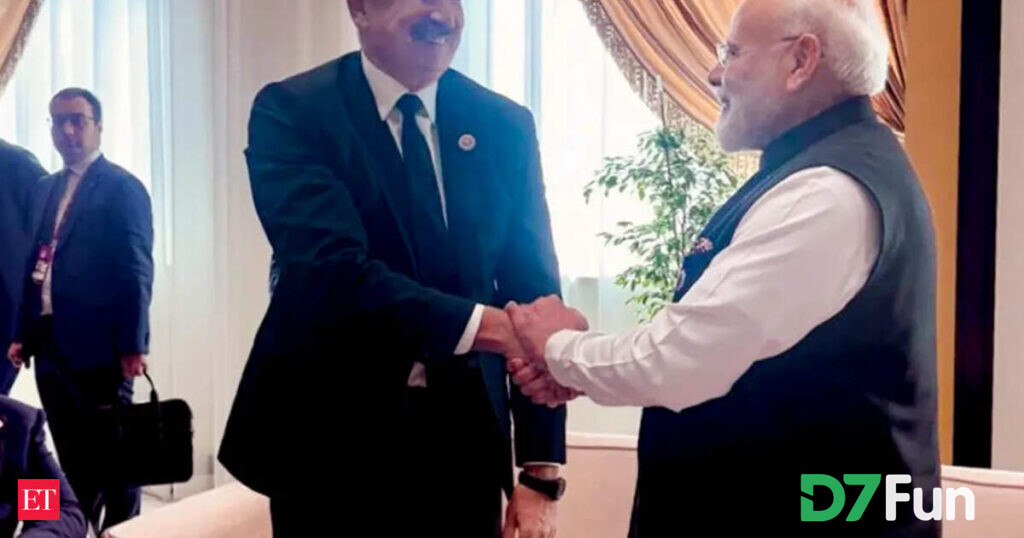
India and Azerbaijan, under the leadership of Prime Minister Narendra Modi and President Ilham Aliyev, are on the brink of a strategic breakthrough. Their recent high-level talks have raised hopes that a crucial missing link in the International North-South Transport Corridor (INSTC) could soon be activated. This multimodal route, which promises to connect Mumbai with St. Petersburg via Iran and Azerbaijan, has been the subject of sustained diplomatic engagement and infrastructure planning.
Understanding the INSTC and Its Significance
The INSTC is more than just a transport route—it is a game-changing initiative in Eurasian connectivity. By combining sea, land, and rail networks, it aims to shorten transit times significantly and reduce logistics costs between South Asia, Central Asia, and Northern Europe. For India, the corridor presents an alternative to traditional maritime routes, offering supply chain diversification and enhanced trade resilience.
Modi-Aliyev Meeting: A Catalyst for Progress
During the recent bilateral summit in New Delhi, Prime Minister Modi and President Aliyev reviewed plans to clear bottlenecks along the INSTC. India has successfully traded with Russia over this corridor for four years, but certain stretches—particularly the Azerbaijani segment—require accelerated investment and technical alignment. The leaders’ joint statement emphasized their shared commitment to intensify cooperation on transport infrastructure, customs harmonization, and port connectivity.
Key Components of the Missing Link
The so-called “missing link” refers primarily to upgrades on the Zangezur corridor within Azerbaijan, as well as improvements to Iranian rail and road networks. Modernizing freight terminals, streamlining border procedures, and deploying digital cargo tracking are essential steps. Accelerating these projects could deliver tangible benefits:
- Reduced transit time by up to 40% compared to conventional sea routes.
- Lower logistics costs through streamlined customs and handling.
- Enhanced trade volumes with Central Asian republics and beyond.
Russia’s Parallel Efforts and Regional Synergy
Russia, a key stakeholder in the INSTC, is exploring additional rail links connecting it directly to India via Central Asia. Discussions are underway to integrate Kazakhstan’s and Uzbekistan’s rail systems into the corridor framework. Such synergy could transform the INSTC into a truly intercontinental network—akin to a grand relay match where each nation runs its leg with precision, handing over the baton seamlessly to the next.
Economic and Geopolitical Impacts
Unlocking the INSTC’s full potential would yield major dividends. Indian exporters of pharmaceuticals, agro-products, and textiles would find faster access to European markets. Azerbaijani oil and gas could flow more efficiently toward South Asia. Moreover, regional stability and cooperation would be reinforced as trade ties deepen, offering online entertainment in the form of reliable freight services and diversified supply sources.
Next Steps and Future Dialogues
Both governments have agreed to establish joint working groups to oversee project execution, technical studies, and financing models. Future dialogues will focus on aligning regulatory frameworks, exploring public-private partnerships, and mobilizing multilateral development banks. As attention turns to the summer sessions of the Shanghai Cooperation Organisation and BRICS forums, the INSTC missing link is set to feature prominently on the agenda.
Conclusion: A Corridor to Prosperity
The Modi-Aliyev rendezvous marks a new chapter in India-Azerbaijan ties, elevating the INSTC from blueprint to reality. With robust political will, targeted investments, and regional collaboration, this corridor could emerge as a flagship project of 21st-century Eurasian connectivity. For Indian businesses and consumers, it represents not just improved trade flows but also the promise of match excitement in cross-border commerce and tangible rewards for all stakeholders.


