Moody’s Lifts India’s Growth Projection to 7% for FY27
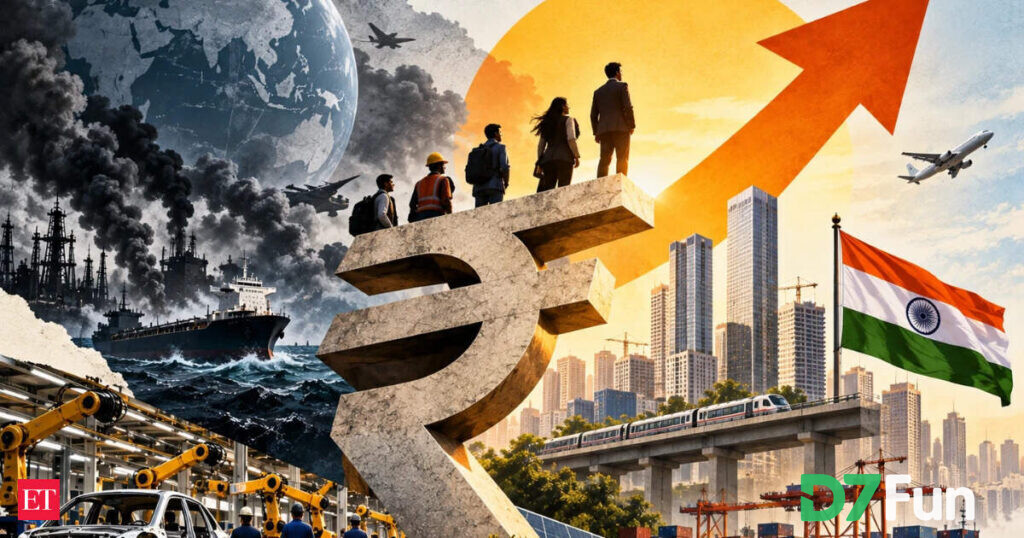
Global credit rating agency Moody’s has revised India’s real GDP growth forecast for fiscal year 2026-27 (FY27) upwards to 7% from its earlier estimate of 6%. This upgrade reflects the economy’s remarkable resilience in the face of heightened geopolitical uncertainty in the Middle East, elevated energy prices, and inflationary pressures. Despite these challenges, strong domestic demand, investment momentum, and an expanding manufacturing and services sector are powering India’s onward march.
Domestic Consumption Remains the Mainstay
Private consumption in India has emerged as a key pillar of support, with urban and rural households demonstrating sustained spending behaviour. High-frequency indicators—from retail footfalls to digital transactions—point to robust consumer sentiment. Smartphone-driven commerce and rising internet penetration have further fuelled online entertainment and sports action platforms, keeping household spending buoyant.
Investment Picks Up Pace
Moody’s highlights the upturn in overall investment activity, driven by government and corporate capex. Infrastructure projects—ranging from highways and ports to renewable energy installations—have seen accelerated fund allocations. Concurrently, domestic manufacturers are expanding capacities, encouraged by production-linked incentives and favourable policies aimed at import substitution and export promotion.
Manufacturing and Services Drive Growth
The Indian manufacturing sector is witnessing a revival, with factories ramping up output in key segments such as electronics, automobiles, pharmaceuticals, and consumer goods. Export demand has also ticked up, supported by a competitive rupee and diversification of supply chains away from traditional hubs. On the services front, IT, business process management (BPM), hospitality, and financial services continue to deliver steady earnings, reinforcing the overall growth profile.
Risks from Oil Prices and Inflation
Despite the upbeat outlook, Moody’s warns of lingering risks. Elevated crude oil prices remain a major concern for India, which imports nearly 85% of its oil requirements. Any sustained spike in global energy costs could stoke inflation and widen the current account deficit. Food-price pressures, linked to erratic monsoons and supply-chain constraints, could further challenge policymakers in maintaining stable retail inflation within the central bank’s comfort band.
Geopolitical Tensions and External Vulnerabilities
The ongoing conflict in the Middle East has underscored India’s exposure to external shocks. In addition to volatility in oil markets, disruptions in global trade routes could pose supply-side challenges. Moreover, potential US tariff measures and trade disruptions in advanced economies could dampen export demand. Moody’s notes that policy clarity, forex reserves management, and stickiness in foreign investment flows will be critical in mitigating these external risks.
Policy Roadmap for Sustained Momentum
To sustain the upgraded growth trajectory, India will need to pursue a balanced policy approach. Continued fiscal prudence, along with targeted spending on infrastructure, health, and education, can bolster long-term potential. The Reserve Bank of India’s (RBI) monetary stance will remain crucial in anchoring inflation expectations without stifling demand. Structural reforms in agriculture, labour markets, and taxation can further enhance productivity and boost trend growth.
Conclusion: India’s Resilience on Display
Moody’s upward revision to a 7% GDP growth forecast for FY27 underscores India’s ability to absorb shocks and maintain momentum. Strong domestic consumption, resilient investment activity, and a balanced manufacturing-services mix are key drivers. While elevated oil prices, inflationary pressures, and geopolitical risks cannot be ignored, prudent policy action and structural reforms will be instrumental in navigating the challenges ahead and sustaining growth prospects.