
Monsoon Deficit Puts Rice Yields Under Pressure
India, the world’s largest rice exporter, is facing its most dramatic drop in paddy output in almost two decades. Below-normal monsoon rains during the critical maturation phase have raised concerns across agricultural belts from Punjab and Haryana to Uttar Pradesh and Tamil Nadu. Local agronomists warn that delayed and uneven showers have hit key grain-producing regions, threatening to cut average yields by up to 10–12% in some areas.
Regional Variations and Yield Impact
While northern states experienced a late onset of rains and prolonged dry spells, southern states saw patchy precipitation that failed to meet crop water requirements. In eastern India, erratic showers forced farmers to rely on fallback irrigation, driving up costs. Industry analysts estimate India’s total rice production this marketing year could drop to around 120 million tonnes, down from last year’s near-record tally of 134 million tonnes.
Domestic Price Movement and Farmer Benefits
The anticipated output decline is set to tighten local stock levels and push up retail and wholesale rates. Traders report that benchmark Basmati prices have already risen by 6–8% in key markets like Delhi and Mumbai. Non-Basmati varieties are similarly seeing price adjustments. This price uptick offers farmers a rare benefit: producers of higher-grade premium rice can command better market premiums, providing relief amid rising input costs.
Export Outlook Remains Resilient
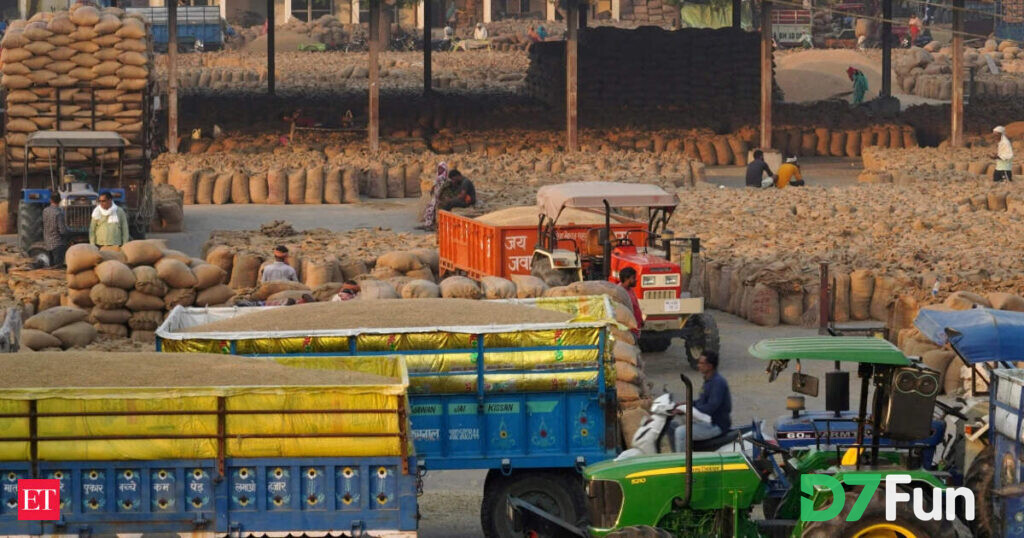
Despite the production dip, India’s vast carryover stocks—accumulated from bumper harvests in prior seasons—will allow the country to maintain strong export momentum. Government data show storehouses still hold more than 40 million tonnes of unsold paddy and polished rice, enough to cover export commitments. As a result, India is on track to sustain near-record rice shipments to major importers like Bangladesh, Saudi Arabia and the Philippines.
Price Stability Measures and Government Support
In view of potential domestic shortages, policymakers are considering calibrated release of Buffer Stocks through the Food Corporation of India (FCI) to keep retail prices in check. State governments are also discussing targeted procurement at minimum support prices (MSP) to shield farmers against market volatility. These measures aim to ensure consumer affordability while upholding farmer incomes.
Long-Term Strategies for Rice Sector Resilience
Experts suggest diversifying cropping patterns, investing in drought-resistant rice cultivars and boosting micro-irrigation facilities as key steps to strengthen resilience against erratic monsoons. Public–private collaborations are being explored to deploy precision-farming tools and mobile advisory services that can alert farmers to weather shifts. Such interventions may not only stabilise future yields but also enhance the quality of Indian rice on the global stage.
With careful policy support and timely rainfall, India hopes to turn the tide on this year’s shortfall and safeguard its status as a dominant rice exporter. Meanwhile, farmers brace for a tight season that could reward those growing premium rice varieties, ensuring a measure of optimism amid the clouds of uncertainty.


